

A weak language vendor on a public contract shows up fast: missed deadlines, a failed audit, and residents who can’t access services they’re legally entitled to. Choosing a language service provider for a government contract is less about the cheapest bid than about a defensible, compliant selection you can stand behind when a reviewer asks why you picked whom you picked. Use the framework below to evaluate vendors before you sign.
What Is a Language Service Provider (and What Government Work Demands)
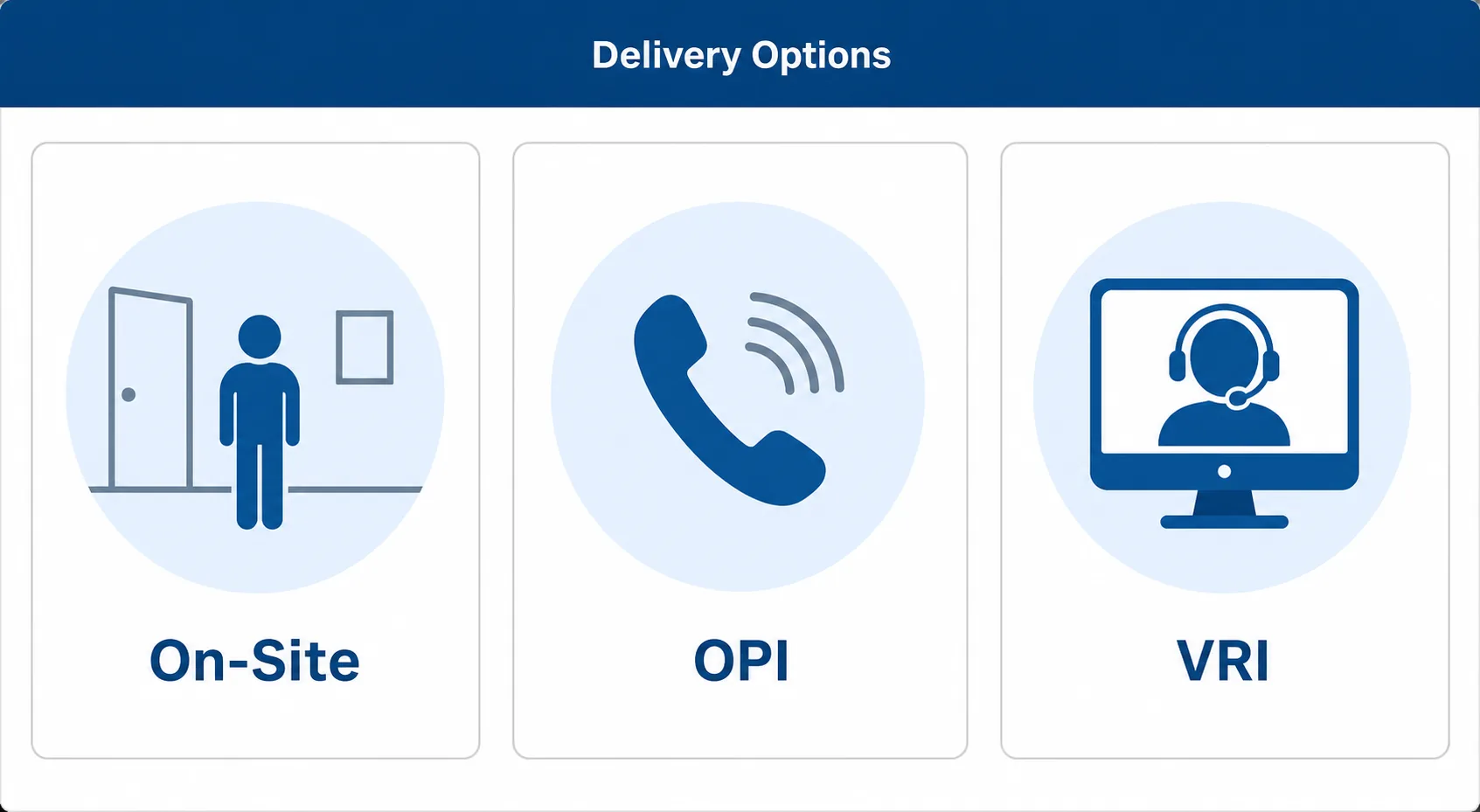
A language service provider (LSP) delivers translation (written content) and interpretation (spoken communication), usually alongside localization, transcription, and certification or notarization of documents. Interpretation comes in several forms: over-the-phone interpreting, or OPI, connects a caller to an interpreter by phone; video interpreting (VRI) adds a screen so participants can see facial expressions and signed languages; and on-site interpreting places a linguist in the room.
Government work differs from commercial work. Public agencies operate under regulatory mandates, handle sensitive and sometimes classified material, and communicate with residents where a mistranslation can carry legal weight. The Department of Justice, in its guidance on choosing a language access provider, treats quality of interpreting and translating as the single most important expectation to hold a provider to. That principle should anchor every evaluation.
Compliance and Legal Mandates Come First
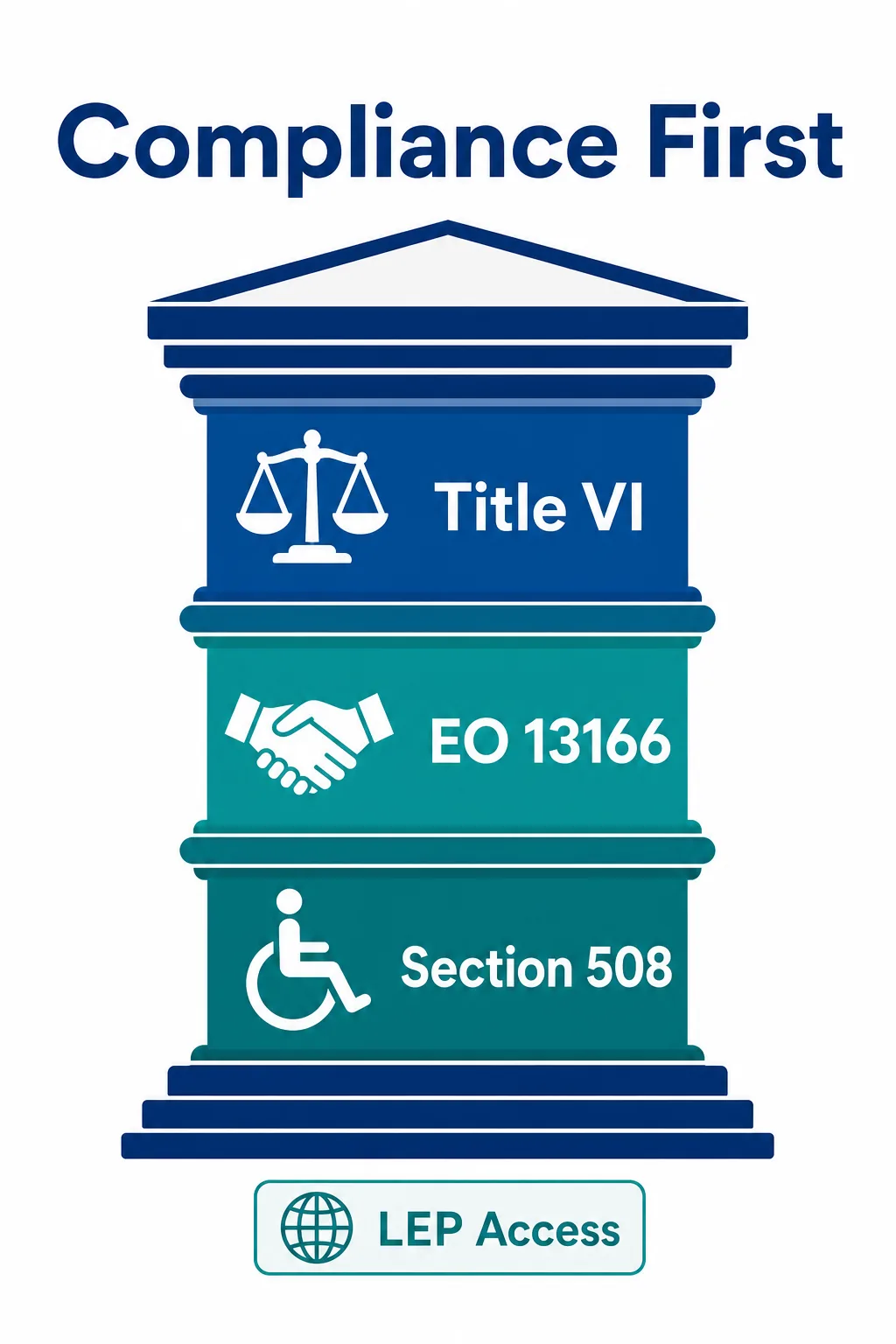
Before quality or price, confirm a vendor can help you meet the law. Title VI of the Civil Rights Act and Executive Order 13166 together require federally funded programs to provide meaningful access to people with limited English proficiency (LEP). Section 508 adds accessibility obligations for digital content. A capable LSP understands these frameworks and can show how their work supports your language access plan.
Ask how they document compliance. Do they track certified linguists against assignment types? Can they produce records that survive an audit? The DOJ’s LEP resources spell out the meaningful-access obligation your contract has to satisfy, so a provider who can’t speak to it fluently is a risk before the work begins.
Choosing a language service provider for a government contract is less about the cheapest bid than about a defensible, compliant selection you can stand behind when a reviewer asks why you picked whom you picked.
How to Evaluate Quality and Qualifications
Quality is where contracts are won or lost. Break the assessment into three parts.
Linguist Credentials and Certification
Ask who actually does the work. Look for court- or medical-certified interpreters, translators with documented subject-matter expertise, and native-level fluency in both source and target languages. Confirm the provider can deliver certified and notarized translation when a filing, benefit application, or legal record requires it.
Quality Assurance Process
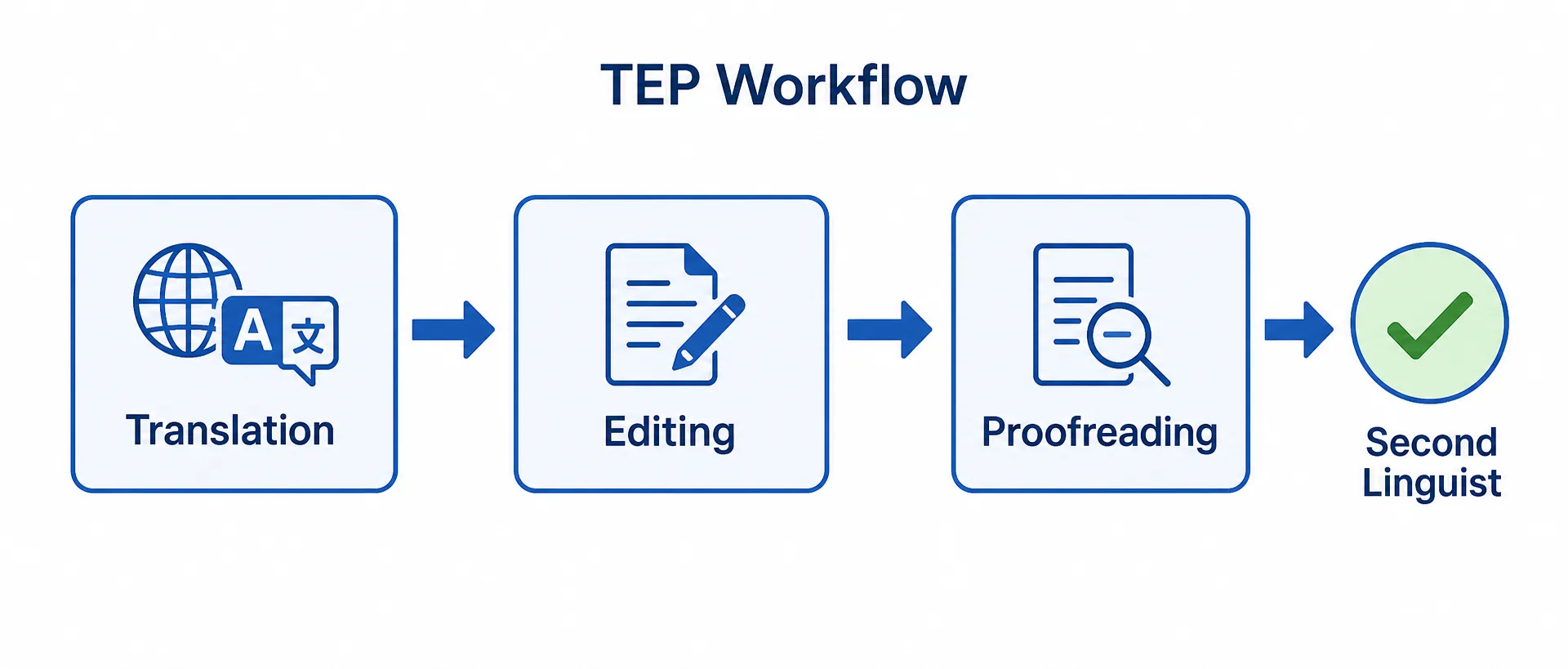
Reputable providers follow a translation–editing–proofreading (TEP) workflow, in which a second qualified linguist reviews every deliverable. The GSA’s Foreign Language Services Ordering Guide advises purchasers to ask directly about a provider’s quality assurance and quality control practices, a fair benchmark for the questions you put to any bidder.
Specialized Domains
Government content spans legal, medical, and technical material, each with its own terminology. A vendor strong in Spanish legal translation may not be equipped for clinical or engineering documents. Match the provider’s proven domains to the content you actually procure.
Security, Confidentiality, and Data Handling
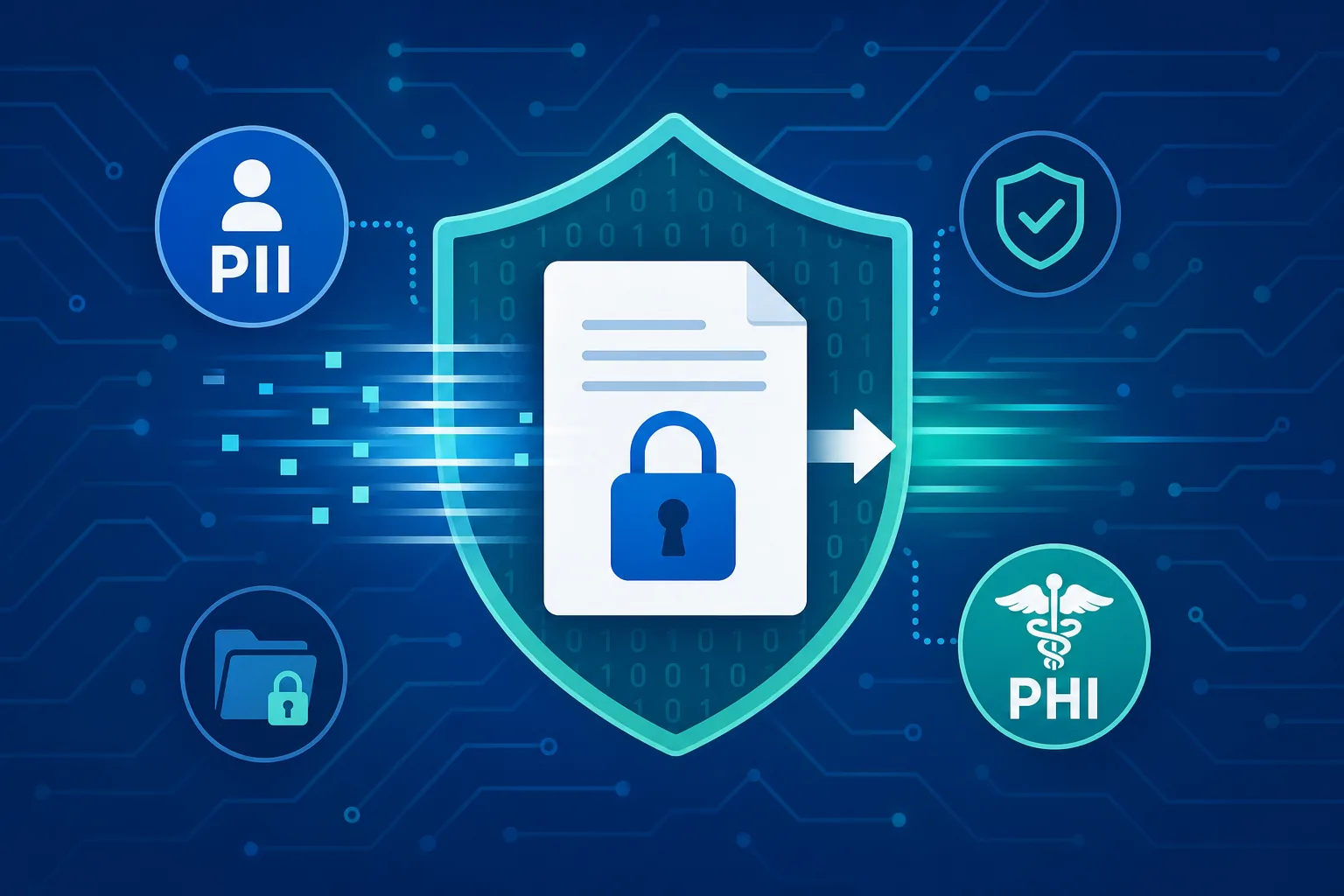
Sensitive records demand more than a signed NDA. Ask whether linguists are background-checked and vetted, how files move (encrypted, secure file transfer, not email attachments), and how the provider handles personally identifiable information (PII) and protected health information (PHI). For classified or otherwise restricted material, confirm the availability of clearance-eligible staff. A provider that treats security as a built-in practice rather than an add-on protects both your data and your agency’s reputation.
Language Coverage and Delivery Modalities
Two dimensions matter here: how many languages a provider covers, and how they deliver.
Depth in the highest-demand languages is table stakes, but public-facing agencies also need capacity in rarer languages spoken by the communities they serve. On delivery, weigh the full mix, on-site interpreting, OPI interpretation over the phone for quick or after-hours needs, video interpreting/VRI for visual and signed-language contexts, on-demand availability, and clear turnaround SLAs for written work. For an agency serving a diverse population, breadth is the difference between reaching residents and leaving them behind.
Capacity, Track Record, and Institutional Knowledge
A provider with real government experience carries knowledge that shortens ramp-up: familiarity with agency terminology, formatting conventions, and procurement rhythms. Ask for references and past-performance records on comparable public contracts. Probe scalability, can they absorb a surge during an enrollment period or emergency, and business continuity, so a single point of failure doesn’t halt service. Institutional knowledge is quiet value that shows up only when a less-prepared vendor stumbles.
Understanding Government Procurement Pathways
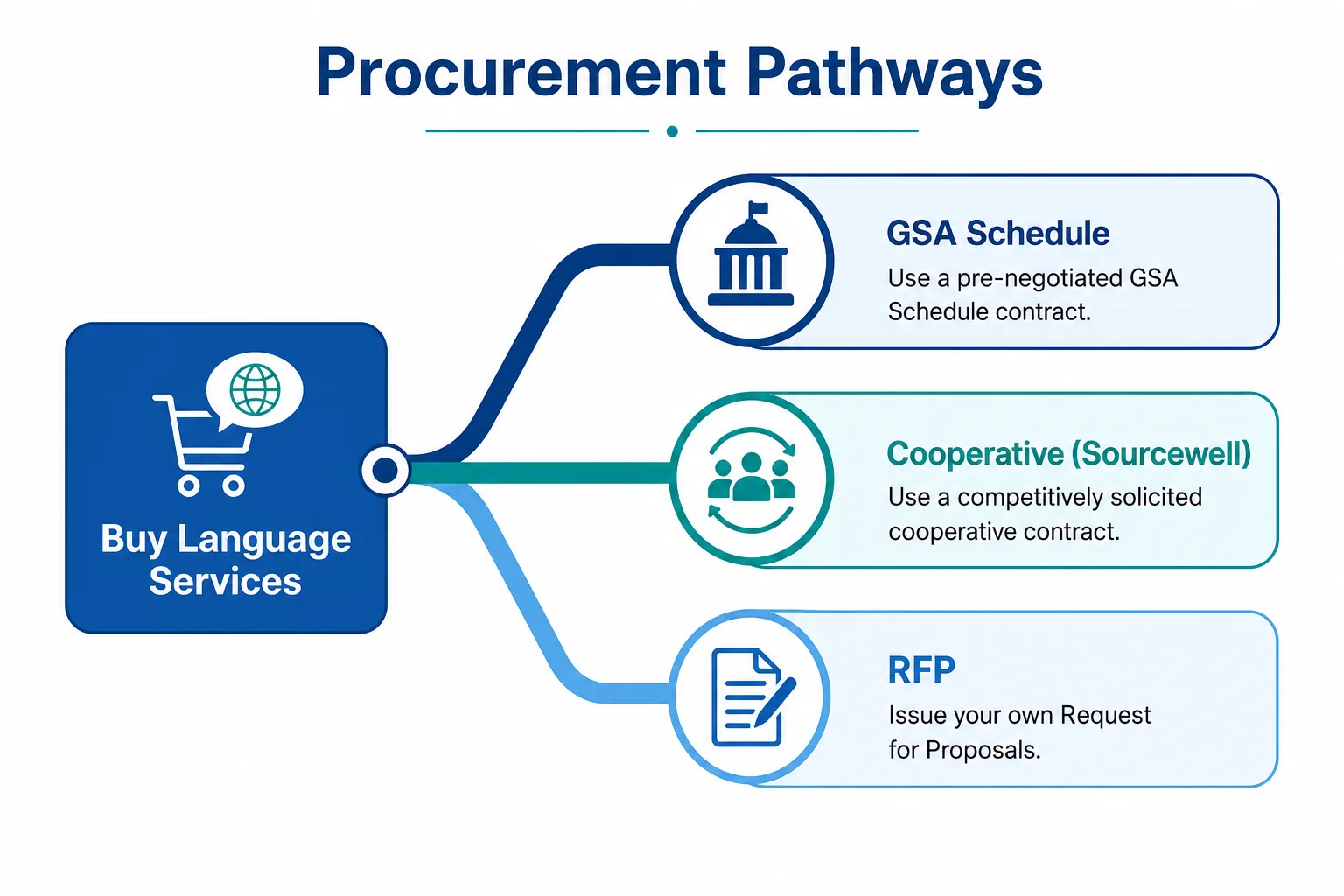
How you buy shapes who you can buy from. Many agencies acquire language services through GSA Schedules and other contract vehicles, or through cooperative purchasing arrangements such as Sourcewell that let public entities buy off a competitively solicited contract without running a full RFP. When you do issue an RFP, define the evaluation criteria, quality, compliance, security, past performance, price, before you read a single proposal.
On cost, expect a range of pricing models rather than one flat rate. Translation is often priced per word; interpreting is typically billed per hour or per minute, sometimes with a minimum. Rates vary by language pair, required certification, and modality, so compare like-for-like across bidders. The GSA’s ordering guide is a practical starting point for structuring how you request and compare these services.
A Quick Vendor-Evaluation Checklist
| Criterion | What to look for |
|---|---|
| Compliance | Documented support for Title VI, EO 13166, and Section 508 |
| Qualifications | Certified linguists with relevant subject-matter expertise |
| Quality assurance | A TEP workflow with a second-linguist review |
| Security | Vetted staff, encrypted transfer, PII/PHI handling, clearance-eligible options |
| Modalities | On-site, OPI, VRI, and on-demand coverage with clear SLAs |
| Language depth | Strength in high-demand and rare languages you serve |
| Track record | References and proven government past performance |
| Procurement fit | Available on GSA, Sourcewell, or your preferred vehicle |
Frequently asked questions
What is a language service provider?
How much do government translators get paid?
What’s the difference between OPI and video interpreting?
Do government translations need to be certified or notarized?
The right LSP behaves less like a vendor filling orders and more like a partner in your compliance and continuity, one who keeps you audit-ready and keeps residents served. If you’re scoping a contract now, map your language, security, and procurement requirements against a provider’s capabilities before you commit.